Creating a home workspace that balances relaxation and productivity is essential for anyone working remotely or studying from home. A well-designed environment can help you stay focused while reducing stress and fatigue. Whether you have a dedicated room or just a corner of your living area, making thoughtful choices can transform your space into a haven for work.
Why Your Workspace Matters
The environment where you work plays a huge role in your ability to concentrate and feel motivated. Clutter, poor lighting, and uncomfortable furniture can lead to distractions and physical discomfort. Conversely, a calm and organised workspace supports better focus and overall wellbeing.
Choosing the Right Location
Pick a Quiet Spot
Select an area that is relatively free of noise and interruptions. If possible, choose a room with a door to close off distractions, or use noise-cancelling headphones if you’re in a shared space.
Maximise Natural Light
Natural daylight helps regulate your body clock and can improve mood. Position your desk near a window to benefit from daylight, but avoid screen glare by placing your monitor perpendicular to the window.
Ergonomic Furniture Matters
Invest in a Good Chair
A supportive chair with adjustable height and lumbar support is crucial. Sitting comfortably prevents back pain and improves concentration during long working hours.
Desk Height and Space
Make sure your desk is at the correct height to keep your forearms parallel to the floor when typing. Also, ensure there is enough space for your equipment and to keep essentials within easy reach.
Keep It Organised
Declutter Regularly
Remove unnecessary items from your workspace. A tidy desk helps your mind stay clear and focused.
Storage Solutions
Use shelves, drawers, or organisers to keep documents and supplies neatly stored. Label containers if it helps you find items quicker.
Create a Calming Atmosphere
Choose Soothing Colours
Soft, neutral colours like pale blues, greens, or creams can promote a calming environment. Avoid overly bright or harsh colours that might cause stress.
Add Personal Touches
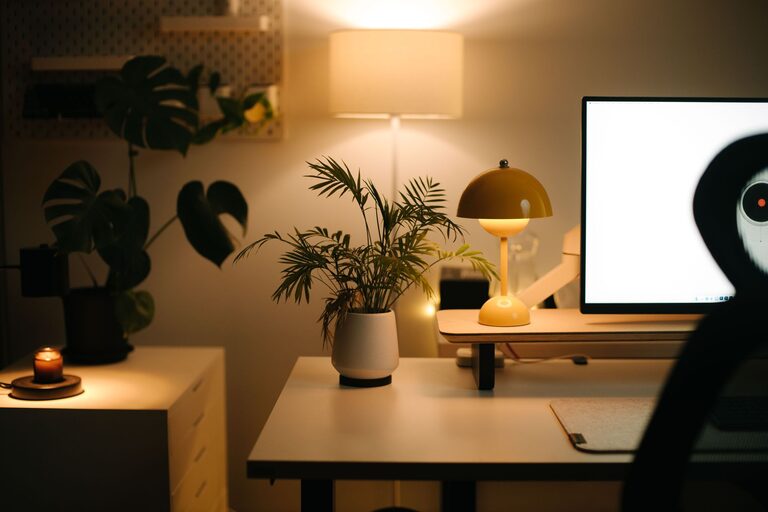
Incorporate items that make you happy and relaxed, like photos, plants, or artwork. However, avoid overcrowding your desk.
Incorporate Plants
Indoor plants can improve air quality and add a refreshing touch. Easy-care options include spider plants, succulents, and peace lilies.
Manage Technology Wisely
Cable Management
Keep cables tidy and out of sight using clips, ties, or cable boxes. This reduces visual clutter and tripping hazards.
Use Quality Equipment
Choose a keyboard, mouse, and monitor suited to your needs. Proper technology can enhance comfort and efficiency.
Establish a Routine and Boundaries
Set Working Hours
Define clear start and finish times to maintain work-life balance. Use alarms or calendar reminders if needed.
Minimise Distractions
Turn off notifications not related to work and inform household members of your schedule to avoid interruptions.
Take Breaks and Move Around
Regular Short Breaks
Following techniques like the Pomodoro method—working 25 minutes and resting 5—can maintain your energy and focus.
Stretch or Walk
Use breaks to stretch or take a brief walk. Movement helps prevent stiffness and refreshes your mind.
Personal Wellbeing in the Workspace
Stay Hydrated and Nourished
Keep a water bottle nearby and have healthy snacks available. Proper nutrition supports sustained concentration.
Maintain Good Posture
Sit with feet flat on the floor, shoulders relaxed, and monitor at eye level to reduce strain.
Summary
A relaxing and productive home workspace combines comfort, organisation, and personal touches. By choosing the right location, investing in ergonomics, managing clutter and technology, and establishing clear routines, you can create a space that supports both your work and wellbeing. Remember to take regular breaks and listen to your body to maintain balance throughout the day. With these tips, your home workspace can become a place where you enjoy working as much as you get things done.